
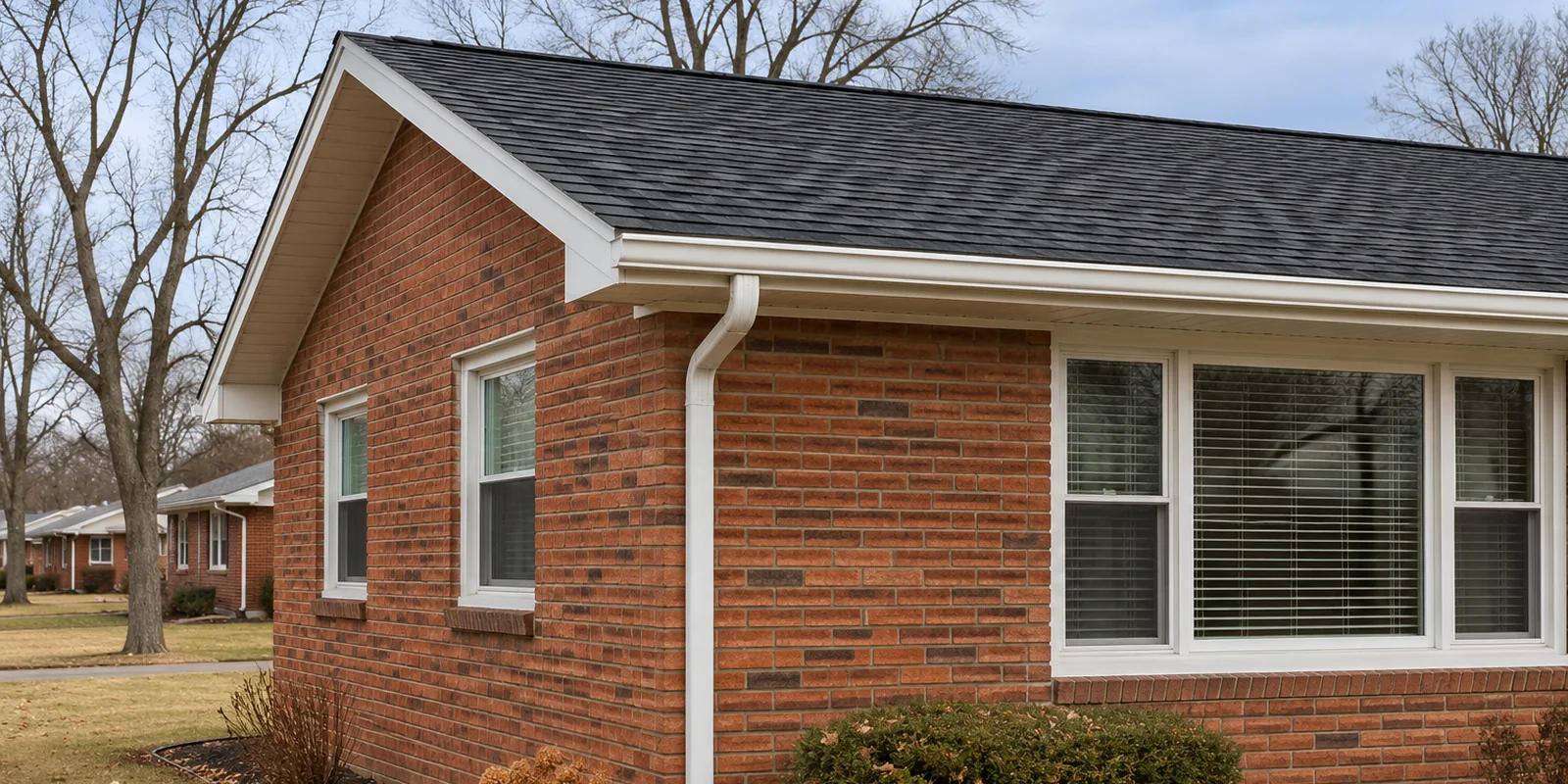
If ice keeps building up along the same stretch of roof, a new layer of shingles may not solve the problem on its own. A roof replacement estimate is a chance to ask two separate questions: What’s causing water to back up here, and what will protect the roof if it happens again? Here’s how Southeast Michigan homeowners can use what they’ve observed to compare written scopes before winter work begins.
Why the same spot can ice up again
An ice dam can form when snow melts on a warmer part of the roof and refreezes at the colder edge, often above an unheated overhang. The ridge of ice can hold back more meltwater. If that water finds its way under the roof covering, it can wet the deck, attic insulation, or ceiling. Warm indoor air escaping into the attic can contribute to uneven roof temperatures. Roof shape and sun exposure can also affect where snow melts.
A few icicles aren’t enough to diagnose a dam, and a ceiling stain can come from another source. The pattern matters: where the ice starts, whether it returns in the same place, and whether the stain appears during a thaw or during ordinary rain. The gutter may be where ice is most visible, but that doesn’t establish that the gutter caused it.
Show the contractor what you can see from inside or the ground
Look from a safe spot away from falling ice. Take a wide photo that shows the roof section and a closer one from the ground so the contractor can tell whether it’s over a room, porch, garage, valley, or dormer. Inside, note the room and the wall or ceiling location, when you first saw moisture, and whether it showed up after snowmelt or rain. Mark any past repair on the photo if you know where it was.
If water is entering now, tell the contractor that when you call so they can advise on the immediate issue separately from the replacement estimate. Avoid climbing onto an icy roof or chopping at ice. If water is near wiring or a light fixture, stay clear and get qualified help.
Separate water protection from the work that addresses melting
An ice and water barrier is a self-adhering layer beneath the roof covering. It gives vulnerable areas another line of protection if water backs up. Ask for the proposed product and where it will go, especially at the affected eave and relevant valleys or transitions. A quote that says only “ice and water shield included” doesn’t tell you which sections are covered or how the edge will be finished.
Roof protection and attic work solve different problems. Sealing air leaks and improving insulation can limit heat reaching the roof. For a vented attic, a contractor can also check whether the soffit intake is blocked and whether the planned intake and exhaust work together. Adding a roof vent alone won’t seal gaps around an attic hatch or light fixture. For a low-slope section or a roof that has little attic access, ask how the specific assembly will be evaluated and who is responsible for that work.
University of Minnesota Extension: how ice dams form and how to reduce the risk
U.S. Department of Energy: protecting eaves in cold climates
Compare the same scope on both roof estimates
Ask both contractors to describe the same problem area in writing. If ice regularly builds above a back addition, for example, a proposal that covers only the main roof edge may leave that transition out. If one contractor includes attic air sealing and the other excludes it, the total prices represent different work. Ask for separate line items so you can compare the roof portion and decide how to address the remaining work.
- Roof edge: Which eaves and transitions get membrane? How will the membrane, flashing and drip edge be tied together at the affected section?
- Hidden damage: Who documents soft or wet decking after tear-off? How is replacement priced, and when will you be asked to approve it?
- Gutters and trim: If gutters, fascia, or soffits need to be removed, reused, or replaced, who handles the work and what’s included?
- Attic: What was actually inspected? Which air sealing, insulation, or ventilation work is included, referred out, or excluded?
- Warranty and cleanup: What written coverage applies to the materials and installation, and who handles disposal and cleanup?
See what a written roof quote should say about decking, flashing and ventilation
Know when to ask about repair before replacement
A recurring icy area alone doesn’t establish that the roof needs replacing. Ask the contractor to explain the condition of the surrounding shingles and visible materials, whether a limited repair is practical, and which observations support a larger project. If the roof is already due for replacement, ask which roof-edge details are easiest to address during tear-off and what attic work can be coordinated separately.
For a free roofing estimate anywhere in Southeast Michigan, bring photos of the affected area and any written quotes you already have. Ask DeWitt to explain the work it recommends, what’s included in the estimate, and what still needs to be checked before you decide.
Plan roof replacement as temperatures fall
Explore DeWitt roofing services
Request a free roofing estimate
This article provides general information. The condition and requirements of each home are different, and an on-site evaluation is needed for a project-specific recommendation.