
Two roof replacement quotes can name the same shingle and still describe different projects. One may explain what happens when damaged wood is uncovered; another may leave that cost open. One may replace flashing at a roof-to-wall junction; another may assume it can remain. For Southeast Michigan homeowners comparing estimates this fall, those details deserve attention before a contract is signed. Start with three parts of the scope: the deck beneath the shingles, flashing at transitions, and the attic ventilation plan.
What sits beneath the shingle price?
Roof decking, also called sheathing, forms the surface that supports the roof covering. It is usually concealed beneath the existing materials, so an estimate made before tear-off has limits. An accessible attic can provide clues, but it does not expose every area or show the entire upper surface.
That uncertainty should be explained, not hidden behind a promise that everything is included. Ask the contractor to separate what has been observed from what remains unknown. A useful proposal identifies the planned roof system and describes how additional work would be documented and approved. A low starting price is easier to evaluate when you understand the circumstances that could change it.
Use the full roof replacement estimate checklist
Decking: compare allowances and the approval process
Replacing shingles does not automatically require replacing every sheet of decking. The contractor should evaluate whether the existing surface is suitable for the planned system. Deteriorated, damaged or otherwise unsuitable areas need a project-specific recommendation; the amount cannot always be established before the old covering is removed.
When comparing proposals, ask whether any decking work is included in the base price. If there is an allowance, identify its quantity and unit. A sheet allowance and an area allowance should not be treated as equivalent without clarification. Ask what the additional rate includes, how replacement quantities are measured and who approves the work.
Request photographs that connect each finding to a location on your roof. Also ask how the crew will protect an opened area while a decision is made. A documented change process helps you understand a necessary repair without assuming that every unexpected charge is avoidable.
- What decking condition is known now, and what can only be checked after tear-off?
- What replacement material and quantity, if any, are already included?
- How will additional labor, materials and disposal be priced?
- What evidence and written authorization will I receive before added work proceeds?
Flashing: name the locations, not just the material
Flashing helps manage water where the roof meets walls, chimneys and other penetrations. A proposal that only says flashing included leaves an important question unanswered: which locations will receive new work? Walk through the roof features with the estimator and ask for the planned treatment of each relevant transition.
Do not assume all existing flashing must always be discarded or that all of it can safely stay. GAF's technical guidance permits reuse only under defined conditions, including condition and compatibility with the new installation. Ask the contractor to explain any proposed reuse and whether accessing concealed flashing affects siding, trim or masonry.
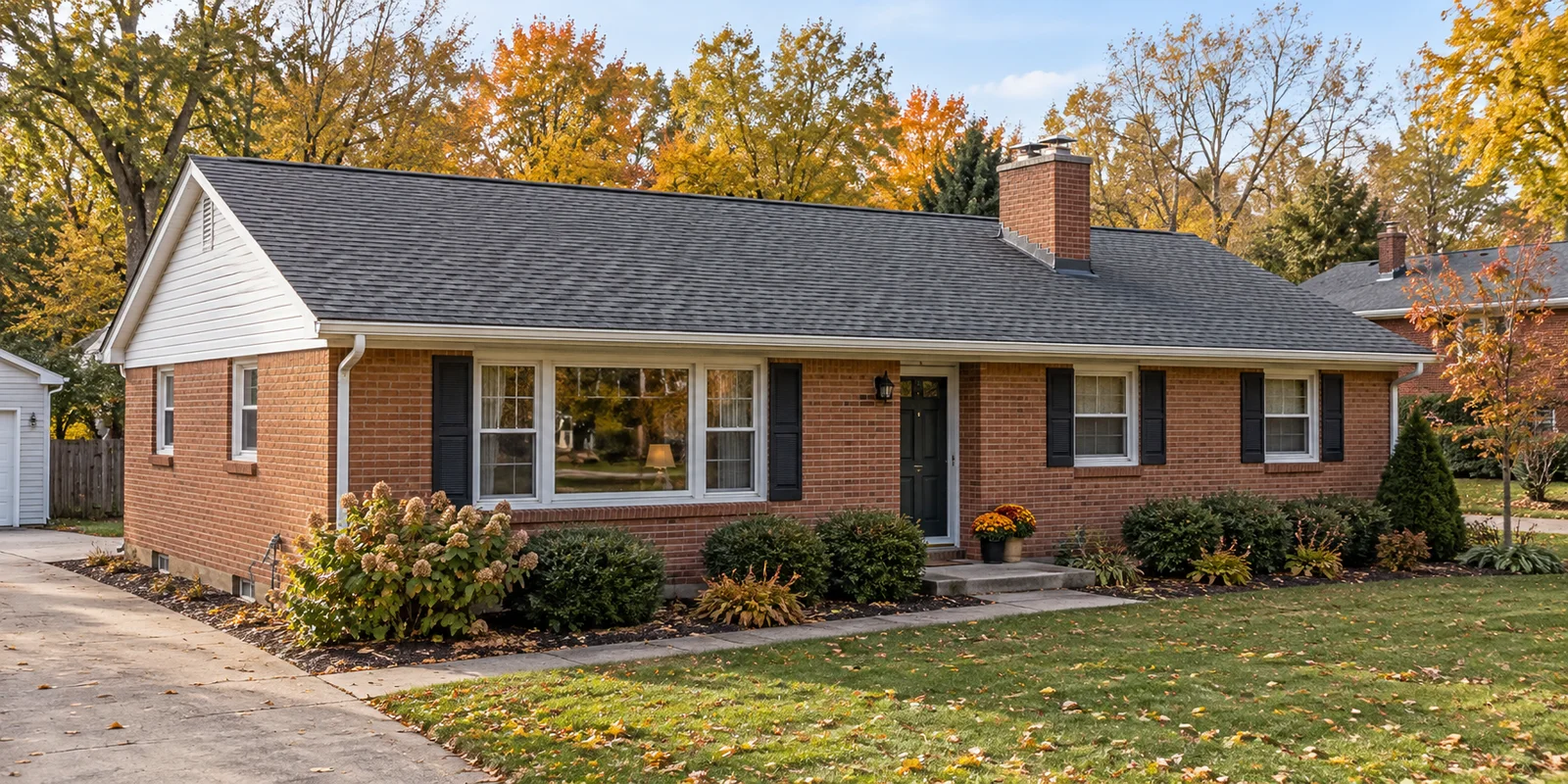
For an older brick home, chimney-related work may involve responsibilities beyond the shingle installation. Clarify whether the quote includes the needed roofing details, whether masonry work is excluded and who handles any separate scope. This is a comparison question, not a reason to diagnose a leak from the yard.
Read GAF's guidance on reusing metal flashing
Ventilation: ask how the whole attic is being considered
For a vented attic, a ventilation plan should consider both intake and exhaust. Naming a ridge vent alone does not explain where replacement air enters or whether that route is unobstructed. Ask which attic spaces were evaluated, what existing vents will remain and how the proposed components work together.
Different roof forms and attic arrangements can require different approaches. A ranch, a colonial and a home with a finished upper floor should not receive an identical recommendation simply because they share a shingle choice. Have the contractor explain the design for your home rather than treating a generic vent quantity as proof of adequacy.
Ventilation also should not be presented as a guaranteed cure for every moisture or winter roof problem. Air leakage from the living space and insulation conditions can matter. Ask whether the inspection identified issues outside the roofing scope and whether any recommended follow-up is included or requires another evaluation.
GAF: planning balanced attic ventilation
U.S. Department of Energy: attic air sealing and moisture
A practical way to compare two proposals
Imagine that one proposal includes a defined decking allowance, identifies flashing by location and describes both intake and exhaust work. A second proposal lists shingles and a total price. The second is not automatically a poor choice, but it needs clarification before the totals can be compared fairly.
Ask each contractor to answer the same written questions. Keep the original proposals and any revised scope together so a verbal explanation does not get lost. Compare included work, exclusions, potential additions and warranty coverage alongside the total. If you are comparing financing, request the actual payment and financing terms for your proposal rather than relying on a headline monthly amount.
- Included now: the materials, labor and quantities in the quoted total.
- Conditional work: what could change after tear-off and how approval works.
- Separate work: any chimney, siding, insulation or interior repairs outside the contract.
- Completion: cleanup, final documentation and whom to contact about a concern.
Use fall planning time to resolve uncertainty
Across Southeast Michigan, October is a useful point to discuss a questionable roof before winter planning becomes urgent. That does not mean every older roof needs replacement now, or that a particular installation date can be guaranteed. Ask how the contractor handles weather interruptions, material requirements and protection of the home if the schedule changes.
Share previous leak locations, repair records and attic concerns during the estimate appointment. Stay on the ground; leave roof access and inspection to qualified professionals. If you have current leaks or suspect storm damage, explain that when requesting an evaluation so the conversation starts with the actual condition.
Discuss a storm-damage roof evaluation
What to ask a contractor to document after wind or hail
Bring DeWitt a quote with the scope attached
DeWitt provides roof replacement estimates throughout Southeast Michigan. Bring the complete written proposal, including materials, installation scope, exclusions and warranty coverage, so the comparison is meaningful. Ask about project options and available financing during your estimate.
Have a quote? DeWitt will beat it. Applies to written quotes from licensed and insured contractors for comparable materials, installation scope and warranty coverage.
Review DeWitt's price-beat offer
Explore DeWitt roof replacement services
This article provides general information. The condition and requirements of each home are different, and an on-site evaluation is needed for a project-specific recommendation.