
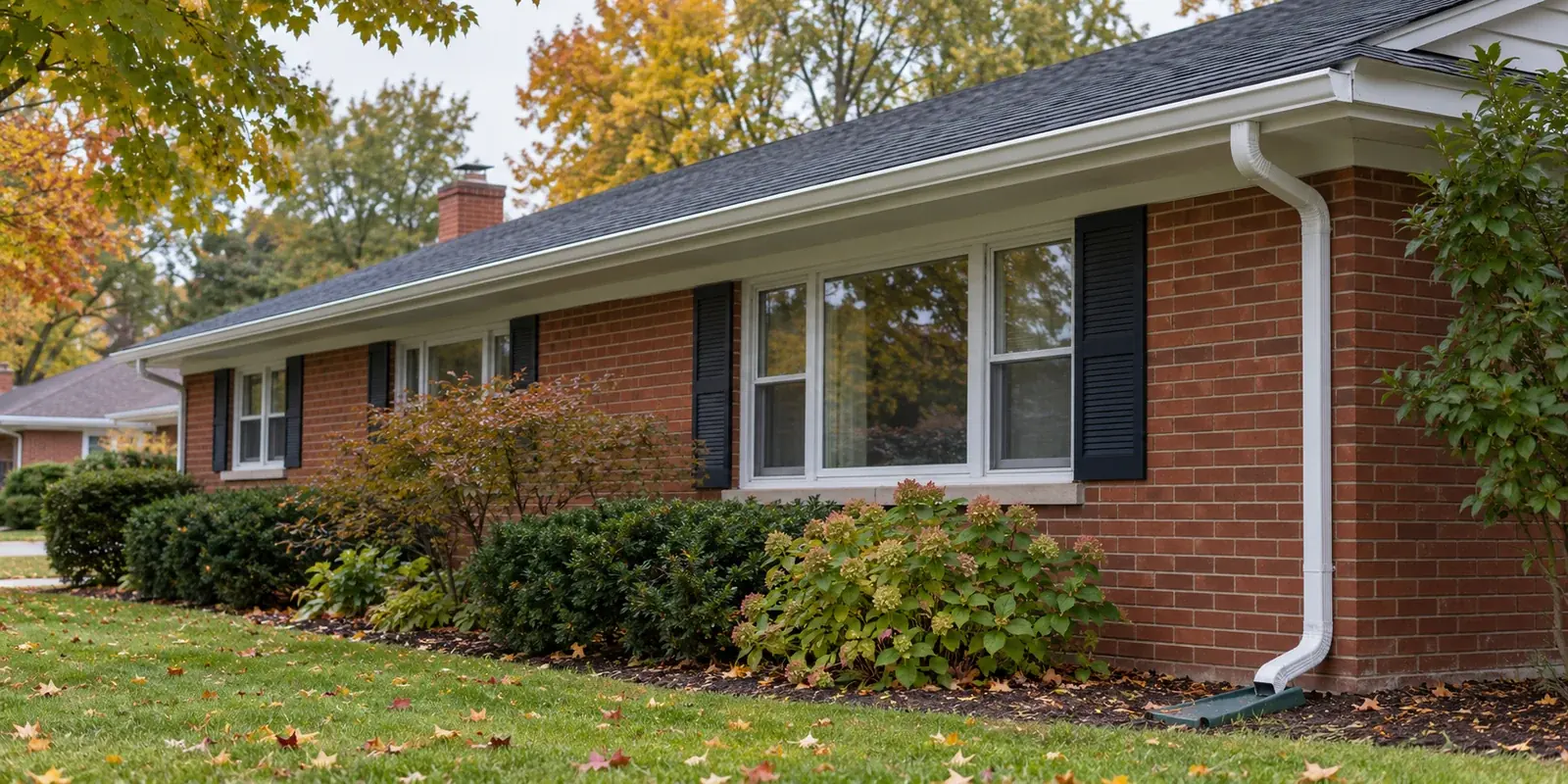
Water spilling over a gutter is a symptom, not a diagnosis. Leaves may be blocking an outlet, a section may have shifted, or runoff may not be reaching the gutter correctly. Before approving replacement, ask what is causing the problem and which parts of the drainage path the estimate addresses. For Southeast Michigan homeowners comparing exterior contractors this fall, that distinction can prevent paying for a new gutter while leaving the original concern unresolved.
Start with observations you can make from the ground
When conditions are safe, note where water leaves the intended path: over the front, behind the gutter, at a joint, or near a downspout. A short video from a sheltered location can be more helpful to an estimator than a description such as “it leaks everywhere.” Include enough of the house to identify the location, and record whether the issue happens repeatedly or only in unusually heavy rain.
Do not climb a ladder during rain, walk on a roof, or reach toward overhead wires to collect evidence. An interior leak, loose gutter over an entrance, or damaged roof edge calls for professional attention. Observations help frame the appointment; they cannot establish the condition of concealed wood or prove where every leak begins.
- Which side of the home is affected, and is the overflow localized or spread along a run?
- Does water come out of the downspout, and where does it go afterward?
- Are there visible gaps, sagging sections, staining, or loose attachments?
- Was the gutter recently cleaned, repaired, or disturbed during other exterior work?
When blockage should be ruled out first
Early fall brings a changing mix of leaves and small debris across Southeast Michigan. A blocked outlet or downspout can interrupt drainage even when the visible gutter appears sound. Ask whether the evaluation includes checking the full route to the discharge point, rather than looking only at the section above the stain.
Cleaning may address a blockage without requiring replacement. It does not correct a damaged attachment, unsuitable drainage layout, or deterioration beneath the gutter. If overflow returns after cleaning, keep a record of the location and timing instead of assuming the same explanation still applies. Ask the contractor to document what was checked and what remains uncertain.
Separate a limited repair from a replacement proposal
A written recommendation should distinguish a specific defect from a broader system problem. Ask whether the proposed work addresses one joint or section, changes the downspout arrangement, or replaces complete runs. Request an explanation of why that scope fits the observed condition. A photograph of a worn area is useful, but it should connect to the actual work being recommended.
For sagging or separated gutters, ask about the condition of the fascia and attachment points. Covering or reusing damaged supporting material can leave an important issue outside the estimate. Because some conditions are not visible until materials are removed, the proposal should explain who documents concealed damage, how additional work is priced, and how you authorize it.
Check the roof edge before treating everything as a gutter problem
Water near an eave does not automatically originate in the gutter. Ask the evaluator to consider the roof edge and nearby intersections, including how runoff is directed toward the gutter. If roof work is also planned, clarify the order of work and who is responsible for the connection between the roofing and drainage systems.
This is especially useful when comparing separate roofing and gutter proposals. Identify which contractor handles removal, reattachment or replacement, fascia work, and final inspection of the completed drainage route. Avoid relying on an assumption that one trade's price includes the other trade's finishing work.
Explore DeWitt roof replacement across Southeast Michigan
Use the roof replacement estimate checklist
Follow the water beyond the downspout
The gutter is only part of water management. The U.S. Department of Energy explains that roof runoff needs to be directed away from the building to reduce saturation around the foundation. A new gutter does not, by itself, establish that the discharge location or surrounding drainage is suitable.
Ask where each outlet will discharge, whether an existing underground connection is included in the evaluation, and what happens if that connection is obstructed. Discuss nearby walks, steps and property boundaries. Avoid directing runoff toward a walking surface or a neighboring property. Site conditions and applicable local requirements should determine the final approach; do not assume that a short extension solves every drainage problem.
Department of Energy: how gutters and downspouts manage roof runoff
Compare the same work in every gutter estimate
A linear-foot price or a material name rarely tells the whole story. Ask for a written scope that lets you compare the proposed system, installation responsibilities and coverage. A homeowner in Washtenaw County and one in Macomb County may need different layouts because their homes differ, not simply because their city names differ.
If a gutter protection product is proposed, ask what debris it is intended to manage, how it is maintained, and what is excluded from its coverage. Avoid treating any guard as a promise that inspection and maintenance will never be needed.
- Gutter material, profile, size and locations, with the reason for the proposed configuration.
- Downspout locations, outlets and discharge arrangements; identify any drainage work excluded.
- Removal, disposal, attachment work and the handling of concealed fascia damage.
- Coordination with roofing or siding work and protection of landscaping.
- Material and workmanship coverage, maintenance responsibilities and any transfer terms.
Plan a clear next step for your Southeast Michigan home
Bring your photos, prior repair history and any written competing estimate to the appointment. Tell the representative whether you are planning roofing, replacement windows or other exterior work at the same time. DeWitt serves homeowners throughout Southeast Michigan and can discuss the proposed gutter replacement scope, scheduling and available financing options.
Have a quote? DeWitt will beat it. Applies to written quotes from licensed and insured contractors for comparable materials, installation scope and warranty coverage. Coverage varies by package; discuss warranty options with your sales representative. The goal is a clear comparison of the work your home needs, with the responsibilities written down before you proceed.
Explore gutter installation and replacement from DeWitt
Review DeWitt’s price-beat offer and qualification
Request a free gutter replacement estimate
This article provides general information. The condition and requirements of each home are different, and an on-site evaluation is needed for a project-specific recommendation.